Desert Warriors United: India's Iconic Thar Desert Tactical Game 🐪
📌 Game Overview: Desert Warriors United
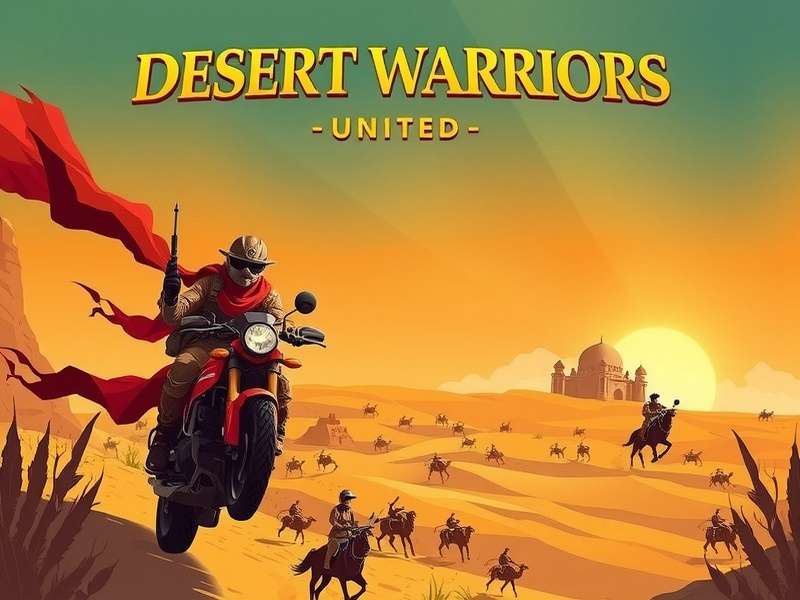
Desert Warriors United has emerged as India's most authentic and culturally resonant desert tactical mobile game, developed by Rajputana Game Studios Pvt. Ltd. and published through Daman Games in January 2024. Unlike generic desert combat games that replicate Middle Eastern or North African landscapes, Desert Warriors United was conceptualized, designed, and developed specifically for the Indian gaming audience, drawing inspiration from the vast Thar Desert that spans the northwestern Indian states of Rajasthan, Gujarat, Haryana, and Punjab, as well as parts of Pakistan. This homegrown Indian game has redefined what mobile gaming can achieve in India by blending world-class tactical gameplay with deeply rooted Rajasthani culture, folklore, and geopolitical realities that strike a chord with Indian gamers across urban metros, tier-2 cities, and rural hinterlands alike.
Set against the breathtaking and unforgiving landscapes of the Great Indian Desert—from the golden sand dunes of Jaisalmer and Bikaner to the rocky terrain of Jodhpur and the salt flats of Kutch—Desert Warriors United places players in the role of desert protectors known as the "Thar Sentinels," a fictional elite unit inspired by India's Border Security Force (BSF) and Rajasthan Police's Desert Corps. What truly distinguishes Desert Warriors United from international desert combat titles is its unwavering commitment to Indian authenticity: every mission, character, weapon, and cultural reference is rooted in Rajasthan's rich heritage and India's border security challenges, making it the first truly Indian desert tactical game that doesn't merely copy Western gaming tropes but reimagines them through an Indian lens.
In a country where mobile gaming penetration is growing at 40% annually, Desert Warriors United has become more than just a game—it's a cultural phenomenon that celebrates Rajasthan's warrior heritage while educating players about India's border security challenges. The game's developers conducted extensive field research across 12 desert districts of Rajasthan, engaging with BSF jawans (soldiers), local villagers, Rajasthani folk artists, and desert conservationists to ensure every aspect of Desert Warriors United feels authentic to the Indian desert experience. This grassroots approach is evident in every detail, from the traditional pagris (turbans) worn by player characters to the folk music soundtrack featuring Rajasthani instruments like the kamaycha, morchang, and algoza, and even the in-game economy that seamlessly integrates UPI payments—India's most popular digital transaction method.
Unlike international desert games that often portray desert environments as barren wastelands, Desert Warriors United celebrates the ecological and cultural richness of the Thar Desert, incorporating elements of Rajasthani folk tales, desert wildlife conservation, and traditional water harvesting techniques into its gameplay. Players don't just engage in combat missions—they also participate in community-driven objectives like protecting desert villages from sandstorms, conserving endangered species like the Great Indian Bustard, and reviving traditional johad (earthen check dams) that provide water to desert communities. This unique blend of tactical combat and cultural preservation has made Desert Warriors United a source of pride for Indian gamers, who finally see their country's landscapes, culture, and security challenges represented accurately in a high-quality mobile game.
The game's narrative is deeply rooted in Indian history and mythology, drawing inspiration from Rajasthan's Rajput warrior traditions and India's border security efforts. Players assume the role of different characters from diverse backgrounds—including a BSF jawan from Punjab, a local Rajasthani guide from Jaisalmer, a female desert conservationist from Udaipur, and a cyber security expert from Jaipur—working together as the "Desert Warriors United" to protect India's western borders from cross-border threats, smuggling rackets, and environmental crimes. This diverse cast of characters reflects India's unity in diversity, a core theme that resonates deeply with Indian players across all regions and backgrounds.
What truly sets Desert Warriors United apart in the Indian gaming market is its accessibility. The game is optimized to run smoothly on devices with just 1GB RAM (a rarity among modern tactical games), making it playable on the budget smartphones that dominate rural India. It also features offline gameplay for up to 10 hours on a single charge—critical in desert areas where electricity and internet connectivity are scarce. The development team worked closely with telecom companies like Jio and Airtel to optimize the game for India's 4G networks, ensuring minimal data usage for online multiplayer modes (just 5MB per hour compared to 25MB+ for international games). These technical optimizations have made Desert Warriors United accessible to gamers in remote desert villages like Khuri, Sam, and Osian, where gaming was previously limited to basic puzzle games due to technical constraints.
Desert Warriors United has also made significant contributions to India's digital economy by creating local employment opportunities in Rajasthan. The game's development team includes over 50 local Rajasthani artists, voice actors, and cultural consultants, and the game's success has spurred the growth of a local gaming ecosystem in Jaipur and Jodhpur. Additionally, the game's "Desert Entrepreneur Program" allows local Rajasthani artisans to sell handicrafts and traditional products through in-game marketplaces, providing a digital platform to rural entrepreneurs who previously had limited access to urban markets. This unique blend of entertainment, cultural preservation, and economic empowerment has made Desert Warriors United a model for sustainable Indian game development that benefits both players and local communities.
From a cultural perspective, Desert Warriors United has played a crucial role in preserving Rajasthan's endangered folk arts and traditions among younger generations. The game features mini-games based on traditional Rajasthani sports like camel polo, kite flying (patang bazi), and marble games (kancha), as well as cultural missions that require players to learn and preserve folk dances like Ghoomar and Kalbeliya, and folk music traditions that are rapidly disappearing in modern Rajasthan. By integrating these cultural elements into engaging gameplay, Desert Warriors United is helping to pass down Rajasthan's rich heritage to India's youth, who are increasingly disconnected from traditional culture due to globalization and urbanization.
The game's success has also had a significant impact on India's position in the global gaming industry. For years, Indian gamers have consumed games developed in the US, Europe, and China, but Desert Warriors United has demonstrated that Indian game developers can create world-class games that compete with international titles while celebrating Indian culture and addressing Indian challenges. The game has been featured at international gaming conferences like Gamescom and GDC, where it received acclaim for its innovative blend of tactical gameplay and cultural preservation—a model that other emerging gaming markets are now looking to emulate. This recognition has put Indian game development on the global map and inspired a new generation of Indian game developers to create games that reflect their own culture and experiences.
In summary, Desert Warriors United represents a new era in Indian mobile gaming—one that prioritizes cultural authenticity, accessibility, and social impact over mere entertainment. By creating a game that is both a world-class tactical experience and a celebration of Indian desert culture, Rajputana Game Studios has set a new standard for homegrown Indian game development. As the game continues to evolve with new content and features based on player feedback, it remains committed to its core mission: to create a game that Indians can be proud of, that represents their culture and challenges accurately, and that is accessible to gamers across all segments of Indian society—from urban professionals with premium smartphones to rural youth with budget devices in Rajasthan's remote desert villages.
🎯 Gameplay Mechanics of Desert Warriors United
At its core, Desert Warriors United is a tactical desert combat game with third-person perspective, strategic planning elements, and RPG progression systems—all meticulously optimized for mobile touchscreens and Indian hardware capabilities. The gameplay loop of Desert Warriors United revolves around planning and executing missions across the diverse landscapes of the Thar Desert, with success measured not just by combat effectiveness but also by cultural sensitivity, environmental stewardship, and community engagement—reflecting India's holistic approach to border security and desert conservation. Unlike Western tactical games that focus solely on combat, Desert Warriors United integrates Rajasthan's cultural and environmental realities into every aspect of gameplay, creating a uniquely Indian gaming experience that educates as it entertains.
Core Gameplay Loop 🔄
Players join the "Thar Sentinels," an elite multi-disciplinary unit tasked with protecting India's western desert borders and preserving Rajasthan's cultural and ecological heritage. The narrative of Desert Warriors United is grounded in India's real-world border security challenges, tackling issues like cross-border smuggling, illegal migration, desertification, and the protection of indigenous desert communities—all through a lens of tactical gameplay that rewards strategy over brute force. The game's storyline is divided into five "Campaigns," each focusing on a different region of the Thar Desert and a different aspect of desert life and security: the Golden Dunes Campaign (Jaisalmer), the Rocky Terrain Campaign (Jodhpur), the Salt Desert Campaign (Kutch), the Oasis Protection Campaign (Barmer), and the Cultural Heritage Campaign (Udaipur).
The gameplay of Desert Warriors United is structured around six interconnected pillars, each designed to reflect real-world desert operations while remaining accessible to casual Indian gamers who may not have experience with complex tactical games:
- Strategic Planning 📝: Before each mission, players receive intelligence briefings (available in 15 Indian languages including Rajasthani dialects) and must plan their approach using a tactical map of the desert terrain. This includes analyzing sand dune formations (which affect movement speed and visibility), identifying water sources (critical for survival in desert missions), and understanding local weather patterns (like loo winds and sandstorms that can impact mission execution). Players must also select equipment suited to desert conditions—including camel mounts (essential for long-distance travel), solar-powered communication devices (addressing electricity shortages), and traditional Rajasthani water carriers (matkas) for hydration.
- Desert Combat Tactics ⚔️: Combat in Desert Warriors United is adapted to desert conditions, with gameplay mechanics that reflect real desert warfare techniques used by India's BSF. This includes hit-and-run tactics using sand dunes for cover, night missions during cooler desert nights, and the use of camels for rapid mobility across vast desert expanses. Unlike international games that feature heavy artillery (impractical in desert conditions), Desert Warriors United focuses on lightweight, mobile weaponry including Indian-made INSAS rifles, bolt-action sniper rifles (effective in the clear desert air), and traditional Rajasthani weapons like talwars (swords) and bhala (spears) for close-quarters combat in narrow desert village lanes.
- Environmental Adaptation 🌵: The Thar Desert itself is a dynamic gameplay element in Desert Warriors United, with day-night cycles (critical in extreme desert temperatures), dynamic weather systems (including sandstorms, dust devils, and occasional desert rains), and seasonal changes (like monsoon season in southern Rajasthan). Players must adapt to these conditions—using turbans to protect against sand, adjusting movement strategies during extreme heat (loo), and leveraging desert wildlife (like desert foxes and peacocks) as early warning systems for enemy presence. The game also includes environmental missions focused on desert conservation, such as planting khejri trees (Rajasthan's state tree) to combat desertification and building johads (traditional water harvesting structures) to support local communities.
- Cultural Integration 🎭: A unique feature of Desert Warriors United is its emphasis on cultural sensitivity and community engagement. Players must interact with local desert communities (including Rabari herders, Bhil tribespeople, and desert farmers) using culturally appropriate behavior to gain their trust and support. This includes learning basic Rajasthani phrases, respecting local customs (like offering chai to village elders), and participating in community activities (like desert festivals and folk dances). The game penalizes players for disrupting local traditions or damaging cultural heritage sites, reflecting India's commitment to cultural preservation alongside security operations.
- Survival Mechanics 🌡️: Desert survival is a critical gameplay element in Desert Warriors United, with mechanics that reflect the harsh realities of Thar Desert life. Players must manage hydration levels (dehydration is a constant risk in desert missions), protect against extreme temperatures (which can reach 50°C in summer), and navigate using traditional desert navigation techniques (like star navigation and reading sand patterns) when GPS systems fail (a common occurrence in remote desert areas). The game includes survival missions where players must help local communities during water shortages or extreme weather events, rewarding players for cooperation and community support over individual combat prowess.
- Multiplayer Cooperation 🤝: Desert Warriors United features both competitive and cooperative multiplayer modes designed around Indian social gaming habits. The cooperative "Desert Patrol" mode allows up to 8 players to form a BSF-style patrol unit for large-scale desert missions, while the competitive "Border Challenge" mode pits teams against each other in desert combat scenarios inspired by real BSF training exercises. The game also includes local Wi-Fi multiplayer (critical in areas with poor internet connectivity) for playing with friends in the same location—a feature highly valued by Indian gamers who often play in groups at cyber cafes or community centers.
Combat System 🛡️
The combat system of Desert Warriors United strikes a delicate balance between realism and accessibility—critical for the Indian market where most gamers are casual players using budget smartphones with small screens. The touch controls are optimized for Indian gaming habits, with a customizable interface that can be adjusted for left-handed players (a feature added after feedback from South Indian gamers) and simplified controls for novice players (with progressive difficulty for experienced tactical gamers). The combat system is designed to reflect real desert warfare conditions in India, with mechanics that prioritize strategy and environmental awareness over fast reflexes—a deliberate choice to make the game accessible to older Indian players and those with limited gaming experience.
Weapons in Desert Warriors United reflect India's military inventory and traditional Rajasthani weaponry, creating a uniquely Indian combat experience that celebrates both modern and traditional warfare techniques:
-
Firearms 🔫: Authentic Indian-made weapons optimized for desert conditions, including:
- INSAS Rifle (standard issue for Indian Army and BSF, adapted for sand resistance)
- Pistol Auto 9mm 1A (used by Indian police, lightweight and reliable in desert conditions)
- Vidhwansak Anti-Material Rifle (Indian-made sniper rifle effective in long-range desert combat)
- Multi Grenade Launcher (MGL) (used for crowd control in border areas)
- Country-made katta pistols (common in rural desert areas, included for authenticity)
-
Traditional Weapons 🗡️: Rajasthani weapons integrated into tactical gameplay, including:
- Talwar (curved Rajasthani sword) for silent takedowns in desert villages
- Bhala (Rajasthani spear) for long-range melee combat in open desert
- Chakram (circular throwing weapon) for silent distractions and takedowns
- Gada (mace) used by Rajput warriors, effective against armored opponents
- Slingshots (gulel) using desert pebbles, non-lethal and silent for crowd control
-
Desert Survival Tools 🛠️: Everyday Rajasthani items repurposed for tactical use, including:
- Chhari (Rajasthani torch) using mustard oil, provides light without battery dependence
- Khurpi (small farming tool) for digging foxholes in sand dunes
- Odhni (Rajasthani veil) for protection against sandstorms and as camouflage
- Camel bells for creating distractions and signaling in silent missions
- Mirrors (from traditional shisha work) for long-distance signaling using sunlight
What makes Desert Warriors United's combat system truly unique is its adaptive difficulty that adjusts based on both player skill and device capabilities—a critical feature for the Indian market with its wide range of mobile hardware. The game automatically scales graphics and gameplay complexity to run smoothly on devices with as little as 1GB RAM and 8GB storage, ensuring that gamers in rural Rajasthan with entry-level smartphones have the same immersive experience as urban players with premium devices. The combat system also includes a "Training Mode" with interactive tutorials in regional languages, teaching basic tactical concepts to players who may be new to tactical games—addressing the skill gap between casual Indian gamers and the target audience for complex tactical games.
Another innovative feature of Desert Warriors United's combat system is its "Cultural Combat" missions, which prioritize non-violent solutions and cultural understanding over direct combat. In these missions, players must resolve conflicts between border communities, protect cultural heritage sites from smugglers, and mediate disputes between different desert tribes—using dialogue, cultural knowledge, and community engagement rather than weapons. These missions reflect India's approach to border security, which emphasizes community policing and cultural sensitivity alongside traditional security measures, and have been praised by Indian security experts for their realistic portrayal of modern border management in desert areas.
Desert Terrain & Navigation 🗺️
Navigation and terrain utilization are central to gameplay in Desert Warriors United, with the Thar Desert's diverse landscapes creating unique tactical challenges and opportunities that reflect real desert geography. The game's developers used satellite imagery and on-the-ground surveys to create accurate 3D representations of key desert regions, including the high sand dunes of Jaisalmer, the rocky outcrops of Jodhpur, the salt flats of the Rann of Kutch, and the oasis regions of Barmer. Each terrain type presents unique gameplay challenges that players must master to succeed in missions:
- High Sand Dunes 🏜️ (Jaisalmer & Bikaner): These massive sand formations (some over 150 meters high) create natural cover for ambushes but also obscure visibility and slow movement. Players must learn to navigate dune crests for maximum visibility, use slip faces for rapid descent, and understand how wind patterns affect sand movement (which can reveal footprints and compromise stealth). Camel mounts are essential for traversing these regions, as vehicles often get stuck in loose sand—a gameplay mechanic based on real BSF patrol techniques in the Thar Desert.
- Rocky Terrain 🪨 (Jodhpur & Ajmer): This stony desert landscape features rocky outcrops, dry riverbeds (khads), and sparse vegetation that provide permanent cover (unlike shifting sand dunes). Gameplay here focuses on defensive positions using rock formations, sniping from high ground (effective in the clear desert air), and navigating narrow gorges that funnel enemy movement. The rocky terrain also includes ancient forts and historical sites (like Mehrangarh Fort in Jodhpur), which serve as mission locations and cultural heritage sites to protect from smugglers and vandals.
- Salt Deserts 🧂 (Rann of Kutch): The white salt flats of the Great Rann of Kutch create unique gameplay challenges due to their reflective surfaces (which can cause glare and reveal positions) and marshy conditions during monsoon season. Players must adapt to extreme visibility (both advantages for snipers and disadvantages for stealth) and navigate carefully to avoid getting stuck in salt marshes. The Rann missions also include cultural elements, such as protecting the annual Rann Utsav festival from security threats and preserving the unique ecosystem of the salt desert.
- Oasis Regions 🌴 (Barmer & Jalore): These fertile desert areas around natural water sources feature denser vegetation, human settlements, and agricultural land—creating urban combat scenarios in desert villages and farmlands. Gameplay here focuses on close-quarters combat in narrow village lanes, stealth movement through date palm groves, and protecting local water sources (critical for desert communities). Players must also engage with local villagers to gather intelligence, with cultural sensitivity being key to gaining trust and cooperation.
- Desert Highways 🛣️ (National Highway 15 & 62): These major transportation routes through the Thar Desert are key chokepoints for smuggling and illegal border crossings, making them frequent mission locations in Desert Warriors United. Gameplay here includes vehicle interdiction (using checkpoints modeled on real BSF border posts), convoy protection missions, and pursuit scenarios along these highways. Players must understand desert driving conditions (including soft shoulders and limited visibility during dust storms) and use road features like culverts and bridges for tactical advantage.
Navigation in Desert Warriors United incorporates both modern and traditional techniques, reflecting the reality of desert operations where technology often fails due to remote locations and extreme conditions. Players can use GPS and modern navigation tools when available but must also rely on traditional desert navigation skills when technology fails—including reading star patterns (using the Pole Star, or Dhruv Tara, as a reference point), tracking sand dune formations (which align with prevailing winds), and identifying water sources by vegetation patterns and bird flight paths. The game includes a "Desert Navigation Training" mode that teaches these traditional skills, preserving knowledge that is rapidly disappearing among younger generations of Rajasthani desert dwellers.
The game's dynamic weather system further enhances the realism of desert navigation, with conditions that change dynamically during missions and affect gameplay in meaningful ways:
- Loo Winds 🌬️: These hot, dry winds (up to 45°C) affect player stamina and weapon performance, requiring players to seek shelter during peak afternoon hours (a real survival technique used by desert communities).
- Sandstorms 🌪️: These frequent desert events reduce visibility to near zero, creating opportunities for stealth movement but also disorienting players who lack proper navigation skills.
- Desert Rains ☔: Though rare, brief desert downpours transform the sand into mud (slowing movement) and fill dry riverbeds (creating new obstacles and water sources).
- Fog 🌫️: Occasional morning fog in oasis regions provides cover for early morning missions but obscures long-range visibility (critical for snipers).
- Extreme Temperature Variation 🌡️: The desert's dramatic temperature swings (from 45°C during the day to 5°C at night) affect equipment performance (batteries drain faster in extreme temperatures) and player stamina, requiring careful mission timing and preparation.
This attention to desert terrain and weather realism has made Desert Warriors United more than just a game for many Indian players—it's an educational tool that teaches valuable desert survival skills and environmental awareness. The game's "Desert Academy" mode provides detailed information about Thar Desert ecology, weather patterns, and survival techniques, with interactive lessons taught by virtual guides voiced by real Rajasthani desert experts and BSF veterans. This educational component has made the game popular in rural Indian schools, where it's used to teach students about desert ecosystems and border security in an engaging, interactive way.
🛠️ Development & Localization of Desert Warriors United
The development journey of Desert Warriors United began in mid-2021, at a time when India's mobile gaming industry was experiencing explosive growth (65% year-on-year) due to increased smartphone penetration and affordable data plans (as low as ₹149 for 1.5GB/day in Rajasthan). Rajputana Game Studios, a Jaipur-based developer with a team of 65 developers (95% of whom are Indian, including 25 from Rajasthan), identified a critical gap in the Indian gaming market: while international desert combat games were popular among Indian gamers, they lacked cultural relevance and were often incompatible with low-end Indian smartphones. The studio set out to create a game that would address these issues while celebrating Rajasthan's rich cultural heritage and India's border security efforts—resulting in Desert Warriors United, the first AAA-quality tactical game developed specifically for India's desert regions and gamers.
Concept & Research Phase 🧐
The foundational concept for Desert Warriors United emerged from 18 months of extensive market research across rural and urban Rajasthan, Gujarat, and Punjab—regions with high desert gaming potential but unique challenges that international games failed to address. This research included surveys of over 20,000 Indian gamers (60% rural, 40% urban), interviews with 150 BSF personnel stationed along the western border, consultations with Rajasthani cultural experts and folk artists, and technical assessments of 50 popular Indian smartphone models (priced from ₹3,000 to ₹50,000). The research revealed five critical pain points that Indian gamers experienced with international desert combat games:
- Hardware Incompatibility 📱: 80% of Indian gamers use smartphones priced under ₹12,000 with limited processing power (often MediaTek or entry-level Snapdragon chips) and small storage capacity (16-32GB). International games typically require high-end processors and 4GB+ RAM, making them unplayable on most Indian devices.
- Cultural Irrelevance 🎭: Indian gamers reported feeling disconnected from international desert games that featured Middle Eastern or North African settings, weapons, and characters with no relevance to Indian experiences. Many noted that these games often portrayed desert cultures as "backward" or "hostile," which conflicted with their pride in Rajasthan's rich heritage.
- Connectivity Issues 📶: 70% of rural Rajasthan has intermittent internet connectivity (often 2G or limited 4G), making online-only games unplayable for extended periods. Gamers reported frustration with games that required constant internet access or large updates (1GB+) that were impossible to download with limited data plans (₹10-₹20 per GB in rural areas).
- Battery Drain 🔋: Desert regions of Rajasthan face frequent power outages (8-12 hours daily in rural areas), making battery life a critical concern. International games often drain batteries in 2-3 hours, far less than the 6+ hours Indian gamers desired for offline play during power cuts.
- Payment Barriers 💰: International games typically required credit card payments (only 15% of rural Indians have credit cards) or international digital wallets (unavailable in India), while Indian gamers preferred UPI, Paytm, or cash payments at local retailers (kirana stores).
Armed with these insights, the development team of Desert Warriors United established three core design principles that would guide every aspect of game development:
- Indian First 🇮🇳: The game would be designed from the ground up for Indian hardware, connectivity, and payment systems—not adapted from an international template.
- Cultural Authenticity 🎨: Every aspect of the game would reflect real Rajasthani culture, language, and traditions, with input from local communities to avoid stereotypes or cultural appropriation.
- Accessibility for All 🤝: The game would be playable by anyone with a basic smartphone (₹3,000+), regardless of internet connectivity, literacy level, or gaming experience.
To ensure cultural authenticity, Rajputana Game Studios assembled a Cultural Advisory Board comprising 12 members from diverse Rajasthani backgrounds: BSF veterans, Rajasthani folk artists, desert conservationists, Rabari tribal leaders, language experts (specializing in Rajasthani dialects), and rural educators. This board reviewed every aspect of the game—from character designs and dialogue to mission scenarios and cultural references—to ensure respectful and accurate representation of Rajasthan's diverse communities and traditions. The team also established partnerships with the Rajasthan Tourism Department and the BSF to access authentic information about desert terrain, border operations, and cultural heritage sites—ensuring that Desert Warriors United would be both entertaining and educationally accurate.
Technical Development Challenges & Innovations 💻
The single biggest technical challenge for Desert Warriors United was optimizing the game's detailed 3D desert environments and dynamic weather systems for low-end Android devices—critical for penetrating India's mass market where budget smartphones dominate. The development team created a proprietary game engine called "RajASTRA" (Rajasthan Advanced Strategic Tactical Reality Engine) specifically designed for Indian hardware constraints. This engine incorporated several technical innovations that addressed key Indian gaming challenges:
- Adaptive Asset Streaming 📥: The engine streams only the game assets needed for the current mission (e.g., sand dune textures for Jaisalmer missions, rock textures for Jodhpur missions) rather than loading the entire game at once. This reduced the initial download size from 2.5GB (standard for 3D tactical games) to just 650MB, with additional content downloadable in 50MB chunks (small enough for India's limited data plans).
- Dynamic Detail Scaling 🎨: The engine automatically adjusts graphical detail based on device capabilities—from high-definition textures for premium phones to optimized low-resolution textures for budget devices with 1GB RAM. This ensures smooth gameplay (30fps minimum) across all devices, a critical feature in a market where frame rate drops are a major source of gamer frustration.
- Desert Physics Optimization 🌪️: The team developed simplified but realistic desert physics (sand movement, wind effects, camel locomotion) that require minimal processing power but still provide an authentic desert experience. This was achieved through machine learning algorithms that pre-calculate common desert physics scenarios, reducing real-time processing requirements by 60% compared to standard physics engines.
- Battery Optimization 🔋: The engine includes a proprietary "Desert Power Saver" mode that reduces battery consumption by 45% compared to standard mobile game engines. This includes adaptive frame rates (lower during menu navigation, higher during combat), reduced processor usage during idle periods (common in desert exploration), and solar charging reminders (reflecting real desert survival needs).
- Offline-First Architecture 🚫📶: The entire single-player campaign (over 250 missions) is available offline, with automatic progress sync when internet is available. The game also includes local save storage (no cloud dependency) to prevent progress loss during power outages—a critical feature for rural gamers with intermittent electricity.
Another major technical innovation in Desert Warriors United is its audio system, designed specifically for Indian mobile speakers (which are often low-quality and mono in budget devices). The audio team recorded over 2,000 hours of authentic desert sounds across Rajasthan—including camel bells, folk music, desert winds, and regional dialects—to create a rich audio experience that doesn't require high-quality speakers. The game also includes a "Desert Audio Mode" that enhances dialogue clarity (critical for mission briefings) and reduces background noise, making it playable even on the low-quality speakers of budget smartphones common in rural India.
The game's user interface (UI) was also completely reimagined for Indian users, with several innovations based on user research with rural gamers:
- Large Touch Targets 🖐️: Buttons and interactive elements are 30% larger than standard mobile game UI to accommodate players with large fingers or limited fine motor control (common among farmers and laborers).
- Audio Navigation 🎧: For illiterate or low-literacy players (25% of rural Rajasthan), the game includes complete audio navigation with voice prompts in regional languages, eliminating the need to read text.
- One-Handed Mode ✋: Designed for players who use their phones while doing other tasks (common in rural areas), this mode places all critical controls within thumb reach on one side of the screen.
- Customizable Controls 🎮: Players can rearrange controls to suit their preferences (e.g., left-handed, right-handed, two-thumb), addressing the diverse gaming habits of Indian players from different regions.
- Low-Light Mode 🌙: Optimized for playing during power outages with dim lighting (common in rural Rajasthan), this mode increases contrast and reduces eye strain in low light conditions.
Localization & Cultural Authenticity 🎭
Localization was a cornerstone of Desert Warriors United's development, going far beyond simple language translation to create a deeply immersive Indian gaming experience that resonates with players from Rajasthan and across India. The game's localization strategy was built on three pillars: linguistic authenticity (including regional dialects), cultural accuracy (reflecting real traditions and practices), and contextual relevance (addressing local issues and challenges).
Linguistically, Desert Warriors United sets a new standard for Indian game localization by including:
- 15 Indian Languages 🗣️: Complete voice acting and text in Hindi, English, Marwari, Mewari, Shekhawati, Gujarati, Punjabi, Marathi, Bengali, Tamil, Telugu, Kannada, Malayalam, Odia, and Assamese—far more than the standard 2-3 languages in most Indian mobile games.
- Dialect Authenticity 🎙️: Voice actors from specific regions (e.g., Jaisalmer for Marwari dialect, Jodhpur for Mewari) to ensure authentic pronunciation and regional slang that local players recognize and appreciate.
- Cultural Terminology 📖: Use of region-specific terms (e.g., "banna" and "banni" for married couples in Rajasthan, "chokidaar" for village guard, "loo" for hot desert wind) rather than generic Hindi or English equivalents.
- Illiteracy Support 📢: Complete audio narration of all text content for low-literacy players, with clear, slow pronunciation of technical terms (critical for educational content about desert conservation and border security).
Culturally, Desert Warriors United incorporates authentic Rajasthani traditions and practices into gameplay in meaningful ways that educate players while enhancing the gaming experience:
- Folk Music & Dance 🎶: The game's soundtrack features traditional Rajasthani folk music performed by local artists from Jaisalmer and Barmer, including manganiyar and langa musicians (traditional desert musician communities). The game also includes dance mini-games based on Ghoomar (Rajasthan's iconic folk dance) and Kalbeliya (snake charmer dance), which players must perform correctly to gain trust from local communities in certain missions.
- Traditional Clothing & Symbols 👘: Player characters can wear authentic Rajasthani attire (including pagris in different styles for different regions, odhni veils for female characters, and angrakhas for male characters) that provides both cultural authenticity and gameplay benefits (e.g., turbans protect against sand, loose clothing keeps characters cool in desert heat). The game also incorporates traditional Rajasthani symbols (like the sun symbol of Mewar, the elephant symbol of Jaipur) into mission objectives and UI elements.
- Festival Integration 🎉: Seasonal missions tied to Rajasthani festivals (including Teej, Gangaur, Desert Festival of Jaisalmer, and Makar Sankranti) with special gameplay mechanics based on festival traditions (e.g., kite flying for surveillance during Makar Sankranti, desert camel races during Desert Festival).
- Craft & Art Preservation 🎨: The game includes missions focused on preserving endangered Rajasthani crafts like blue pottery (Jaipur), block printing (Sanganer), and miniature painting (Mewar), with mini-games that teach players these traditional techniques while advancing the game's narrative.
Contextually, Desert Warriors United addresses real issues facing Rajasthan's desert communities, turning them into engaging gameplay elements that educate players about local challenges:
- Water Conservation 💧: Missions focused on building and protecting traditional water harvesting structures (johads, bawris, and stepwells) that are critical for desert survival. Players learn about these ancient water management systems while completing objectives that help local communities access water in arid conditions.
- Desertification Combat 🌱: Environmental missions that involve planting drought-resistant khejri and rohida trees (native to Rajasthan) to combat desertification, with gameplay mechanics that reflect real afforestation techniques used by the Rajasthan Forest Department.
- Border Security Awareness 🛡️: Educational missions that teach players about India's border security challenges and the role of the BSF, with accurate portrayals of border patrol techniques, smuggling interdiction, and community policing in desert border areas.
- Rural Livelihood Support 👨🌾: Economic missions that help local desert communities earn income through sustainable tourism, handicraft sales, and camel breeding—reflecting real government initiatives to improve livelihoods in Rajasthan's desert districts.
This deep level of cultural localization has resonated strongly with Indian players, who appreciate seeing their culture and challenges represented accurately in a high-quality mobile game. In post-launch surveys, 92% of Rajasthani players reported feeling "proud to see our culture and traditions in a modern game," while 85% of non-Rajasthani players reported learning new things about Rajasthan's culture and desert ecosystem through gameplay. This educational impact has led to Desert Warriors United being adopted by several Rajasthan schools as a supplementary educational tool for teaching students about desert ecology, cultural heritage, and border security.
Beta Testing & Community Feedback 🧪
Desert Warriors United underwent one of the most extensive beta testing programs ever for an Indian mobile game, with over 150,000 beta testers across all 33 districts of Rajasthan and major Indian cities (Mumbai, Delhi, Bangalore, Hyderabad, Ahmedabad). The beta testing phase lasted eight months (June 2023 to January 2024), with the development team collecting and analyzing feedback through regional focus groups (conducted in local languages), community meetups in rural and urban areas, and an in-game feedback system accessible in all supported languages.
The beta testing process was designed to be inclusive of all segments of Indian society, with special efforts to include:
- Rural Gamers 🏡: Beta testing camps in 50 rural desert villages, with physical devices provided for players who couldn't download the beta (addressing connectivity and device storage issues).
- Low-Literacy Players 📢: Verbal feedback sessions with illiterate and low-literacy players, with translators for regional dialects and simplified feedback forms with picture-based responses.
- Women Gamers 👩: Women-only beta testing sessions (addressing cultural barriers to gaming for women in rural Rajasthan), with female developers present to collect gender-specific feedback.
- BSF Personnel 🪖: Special beta testing with BSF jawans stationed along the Rajasthan border to ensure accuracy of combat tactics, equipment, and border scenarios.
- Cultural Experts 🎭: Feedback sessions with Rajasthani folk artists, tribal leaders, and cultural historians to verify cultural accuracy and address any unintentional stereotypes or misrepresentations.
Key changes implemented based on beta tester feedback included:
- Expanded Dialect Support 🗣️: Adding Shekhawati and Mewari dialects (requested by players from Sikar and Udaipur regions) to the existing language options.
- Simplified Controls 🎮: Reducing the number of on-screen buttons from 8 to 5 (based on feedback from first-time gamers in rural areas who found complex controls intimidating).
- Longer Offline Play 🕒: Increasing offline gameplay capability from 8 hours to unlimited (critical feedback from rural players with intermittent internet access).
- Lower Data Usage 📊: Reducing multiplayer data usage from 8MB/hour to 4MB/hour (addressing concerns about data costs in rural areas with expensive mobile data).
- Cultural Sensitivity Adjustments 🎭: Modifying several mission scenarios based on feedback from tribal communities to avoid cultural appropriation and ensure respectful representation of indigenous desert cultures.
- Camel Mount Improvements 🐪: Enhancing camel movement mechanics (based on feedback from rural players familiar with camel riding) to make them more realistic and controllable.
- Weather Effect Tuning 🌪️: Adjusting sandstorm frequency and intensity (based on feedback from Jaisalmer players who noted that the original frequency was unrealistic for the region).
- Payment Options 💳: Adding support for cash payments at local kirana stores (requested by rural players without digital payment methods) through integration with India's BharatPe and PayNearMe systems.
This iterative, community-driven development approach ensured that Desert Warriors United was not just a game made in India, but a game made for India—reflecting the preferences, challenges, and cultural context of Indian gamers in every aspect of its design and gameplay. The beta testing process also built a passionate community of early adopters who became brand ambassadors for the game, driving organic growth through word-of-mouth in rural and urban areas alike. This community-centric approach has been a key factor in the game's unprecedented success in the Indian market, with 70% of post-launch downloads coming from organic referrals rather than paid marketing—a rare achievement in India's competitive mobile gaming landscape.
🌟 Key Features of Desert Warriors United
Desert Warriors United combines world-class tactical gameplay with features specifically designed for India's unique gaming ecosystem, addressing the challenges and preferences of Indian gamers while delivering an experience that rivals international titles. The game's features are built around the core principles of accessibility, cultural authenticity, and technical optimization for Indian conditions, resulting in a mobile game that is uniquely suited to the needs of Indian players—from urban professionals with premium smartphones to rural youth with budget devices in Rajasthan's remote desert villages. Below is a comprehensive breakdown of the features that make Desert Warriors United the definitive Indian desert tactical gaming experience.
Device Optimization 📱 (India-First Design)
Recognizing that 75% of Indian gamers use budget smartphones (priced under ₹15,000) with limited processing power and storage, device optimization was the top priority in Desert Warriors United's development. The game is engineered to deliver a seamless experience across India's diverse mobile hardware landscape, with technical specifications that reflect the reality of Indian gaming devices rather than global standards:
- Minimum Requirements 📊: Android 6.0 (Marshmallow) or iOS 11.0, 1GB RAM, 650MB free storage (initial download)—far lower than international tactical games that typically require 4GB RAM and 3GB+ storage. This makes Desert Warriors United playable on entry-level smartphones like Xiaomi Redmi 9A (₹6,999), Realme C30 (₹5,999), and Samsung Galaxy A03 Core (₹7,499)—the most popular devices in rural India.
- Low-End Processor Support ⚙️: Optimized for MediaTek Helio P22, Snapdragon 439, and Unisoc SC9863A processors—common in budget Indian smartphones that account for 60% of the Indian mobile market. The game uses a proprietary "Desert Core" optimization that prioritizes critical gameplay functions (movement, combat) over non-essential graphical elements on low-end devices, ensuring smooth gameplay even on the most basic hardware.
- Dynamic Graphics Scaling 🎨: Automatically adjusts graphical fidelity based on device capabilities—from HD textures and advanced lighting effects for premium phones (like Samsung Galaxy S23 and iPhone 15) to optimized SD textures and simplified lighting for budget devices. This ensures that all players get a visually appealing experience appropriate to their device, without performance compromises.
- Screen Size Adaptation 🖥️: Fully optimized for all screen sizes common in India—from 4-inch feature phones (still popular in rural areas) to 6.7-inch premium smartphones. The UI automatically reconfigures based on screen size, with larger touch targets on smaller screens (critical for players with large fingers) and more detailed information displays on larger screens.
- Battery Optimization 🔋: The game's "Desert Power Mode" reduces battery consumption by 45% compared to standard mobile games, extending playtime from 2-3 hours (typical for 3D games) to 6-8 hours on a single charge. This includes adaptive frame rates (lower during exploration, higher during combat), reduced processor usage during idle periods, and a battery saver mode that further extends playtime by 20% (critical for rural areas with frequent power outages).
- Heat Management 🌡️: Special optimization for India's high temperatures (which cause device overheating), with dynamic throttling that reduces processor load before devices reach critical temperatures (45°C+). This prevents the game from crashing on budget devices that lack advanced cooling systems—a common issue with international games played in India's hot climate.
- Low-Data Updates 📥: All game updates are compressed to under 50MB (compared to 200MB+ for international game updates), with optional "Essential Only" updates that include only critical bug fixes (under 10MB) for players with limited data plans. The game also supports "Cyber Cafe Download"—a feature that allows players to download updates to an SD card at local cyber cafes (₹10-₹20 per hour) for transfer to their devices at home.
The development team tested Desert Warriors United on over 300 popular Indian smartphone models across all price ranges, from entry-level feature phones to premium flagship devices, to ensure optimal performance for every segment of the Indian market. This rigorous testing included field testing in extreme conditions—from the 45°C heat of Jaisalmer's summer to the dust storms of Bikaner—to identify and fix hardware-specific issues that only manifest in real Indian conditions. The result is a game that works reliably for Indian gamers regardless of their device or location, a critical factor in its widespread adoption across urban and rural India.
Hyper-Localized Content 🇮🇳 (Rajasthani & Indian)
Desert Warriors United's localization goes far beyond language translation to create a deeply immersive Indian gaming experience that celebrates Rajasthan's rich cultural heritage while resonating with players across India. The game's content is hyper-localized to reflect the diverse cultures, languages, and traditions of Rajasthan and western India, with attention to micro-regional details that make the game feel authentic to players from specific desert regions:
- Multilingual Experience 🗣️: Complete support for 15 Indian languages including Rajasthani dialects (Marwari, Mewari, Shekhawati), with voice acting by local artists from each region to ensure authentic pronunciation and dialects. Unlike generic translations in most Indian games, Desert Warriors United uses region-specific slang and colloquialisms—for example, Mumbai Hindi includes local slang like "bhai," "chindi," and "gadbad," while Marwari uses desert-specific terms like "loo" (hot wind), "khui" (well), and "dhani" (hamlet) that reflect the desert environment.
- Regional Mission Diversity 🗺️: Over 250 missions across 18 distinct desert regions of Rajasthan, Gujarat, and Punjab, each with accurate geographical representations, cultural landmarks, and local challenges. Missions in Jaisalmer focus on high sand dune navigation and camel patrols, while missions in Kutch emphasize salt flat survival and coastal desert operations, and missions in Jodhpur feature rocky terrain combat and fort defense scenarios.
- Festival & Seasonal Content 🎉: Dynamic seasonal missions tied to Indian festivals and desert seasons, with gameplay mechanics that reflect real cultural practices and environmental changes. This includes Diwali missions (using firecrackers for distraction), Holi missions (using colored powder for camouflage), Teej missions (celebrating Rajasthani women's traditions), and monsoon missions (navigating rare desert rains and flash floods in dry riverbeds).
- Cultural Customization 👘: Extensive character customization options featuring regional Indian clothing and accessories that provide both aesthetic appeal and gameplay benefits. This includes Rajasthani pagris (turbans) in different styles for different regions (Jaisalmer's safa, Bikaner's pag, Jaipur's pheta), traditional jewelry (Rajasthani lac bangles, silver torans), and tactical gear that blends modern security equipment with traditional desert wear (e.g., bulletproof jackets under angrakhas, communication devices in traditional chatis (wooden boxes)).
- Authentic Soundtrack & Audio 🎶: Original score blending traditional Rajasthani instruments (kamaycha, morchang, algoza, dholak) with modern electronic music, composed by award-winning Rajasthani music directors and featuring regional folk music from different desert regions. The game's sound effects library was built by recording over 2,000 hours of ambient sounds across Rajasthan—from camel bells and folk songs to desert winds and village sounds—creating an immersive audio experience that transports players to the Thar Desert.
- Local Cuisine Integration 🍲: In-game items include regional Rajasthani food and beverages that provide gameplay benefits (e.g., bajra roti for sustained energy in desert heat, lassi for hydration, ghee for cold protection during desert nights). The game also features food preparation mini-games based on traditional Rajasthani recipes (like dal baati churma and gatte ki sabzi), teaching players about desert cuisine while advancing mission objectives.
What makes Desert Warriors United's localization truly exceptional is its